
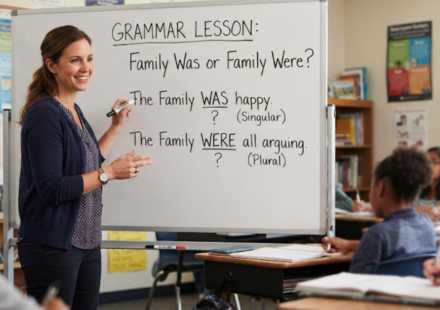
Family Was or Family Were: Which Is Correct?

When you’re writing about relatives, one small grammar question can cause surprising confusion: family was or family were? Since a family contains several people, it may seem logical to use the plural were. But in standard English, the correct…

Sow vs Sew: Meaning, Differences, and Examples
A single letter can completely change the meaning of an English word. Sow vs sew is a classic example: the two words sound alike in some contexts, but they describe completely different actions. Sow is mainly associated with planting seeds or scattering…

Couch or Coach: What’s the Difference?
A single letter can completely change the meaning of a word. That is exactly what happens with couch or coach. Although these words look and sound somewhat similar, they refer to very different things. Couch usually refers to a piece of furniture where…

Shakey or Shaky: Which Spelling Is Correct?
A single letter can turn a perfectly good word into a spelling mistake. If you have ever wondered about shakey or shaky, you are not alone. The two spellings look almost identical, and because the word comes from shake, it is easy to assume that shakey…

Puddy or Putty: Which Spelling Is Correct?
A single letter can completely change whether a word is correct. If you’ve been wondering about puddy or putty, the answer depends on what you’re trying to say—but when you mean the soft material used for filling, sealing, or repairing, putty…

Simular vs Similar: Which Spelling Is Correct?
One small spelling mistake can make an otherwise polished sentence look careless. If you’ve ever wondered about simular vs similar, the answer is straightforward: similar is the correct spelling in standard English. Simular is a common misspelling…
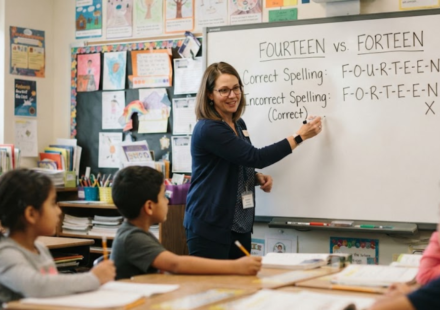
Fourteen vs Forteen: Which Spelling Is Correct?
If you have ever paused while writing the number 14 and wondered about fourteen vs forteen, you are not alone. The spelling can feel confusing because the word is pronounced quickly, and its connection to “four” is not always obvious. The correct…

Timeframe or Time Frame: Which Is Correct?
A small space can create a surprisingly common grammar question: timeframe or time frame? Both forms are widely encountered, but if you’re wondering is timeframe one word, the answer depends partly on style and usage. In modern English, timeframe…

Stoping or Stopping: Which Spelling Is Correct?
One extra letter can completely change whether a word is correct. If you have ever wondered whether it is stoping or stopping, the answer is straightforward: stopping is the correct spelling when you mean the present participle of stop. The word stoping…

Refer or Reffer: Which Spelling Is Correct?
If you have ever paused while typing the word refer, you are not alone. The spelling can be surprisingly easy to second-guess, especially when you start adding endings such as -ing or -ed. So, is it refer or reffer? The correct spelling is refer. Reffer…