
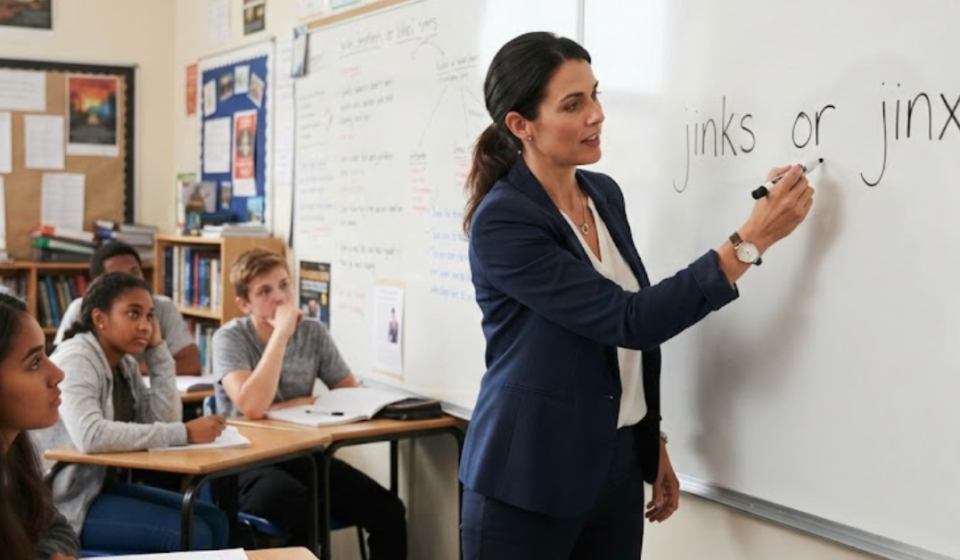

English is full of words that sound alike but have different spellings, meanings, or levels of acceptance. One common source of confusion is jinks or jinx. You may have heard someone say, “Don’t jinx it!” or come across the word jinks in books, military discussions, or casual conversation. So, are jinx and jinks the same word, or do they have different meanings?
The answer is a little more nuanced than you might expect. Jinx is the standard English word most people use today, while jinks is a legitimate word in certain contexts but usually has a different meaning. In this guide, we’ll compare jinks or jinx, explain the jinks meaning, provide examples, and help you choose the correct word in every situation.
Jinks or Jinx: The Quick Answer
Here’s the simple answer:
- Jinx is the standard word used to describe bad luck or to say someone has caused bad luck.
- Jinks is also a real word, but it has different meanings and is much less common.
In most everyday conversations, jinx is the word you’re looking for.
What Does Jinx Mean?
Jinx can be used as both a noun and a verb.
As a Noun
A jinx refers to a person, object, or situation believed to bring bad luck.
Examples:
- That old building is said to be a jinx.
- Some athletes believe certain routines prevent a jinx.
As a Verb
To jinx someone means to unintentionally bring them bad luck, often by mentioning something positive before it happens.
Examples:
- Don’t jinx the game by saying we’ve already won.
- I think I jinxed my interview by talking about it too much.
This is by far the most common use of the word today.
What Is the Jinks Meaning?
Many people search for the jinks meaning because they’ve encountered it outside of the usual “jinx” context.
The word jinks has several meanings, depending on how it’s used.
1. High Spirits or Playful Behavior
Historically, jinks referred to lively games, pranks, or playful activities.
Example:
- The children were up to their usual high jinks.
Interestingly, the familiar expression is actually high jinks, not high jinx.
2. Sudden Evasive Movements
In aviation and military language, jinks describes quick, unpredictable maneuvers used to avoid an opponent or obstacle.
Example:
- The pilot performed defensive jinks to avoid enemy fire.
This specialized meaning is still used today in military and aviation contexts.
Jinx or Jinks: What’s the Difference?
Although they sound similar, jinx and jinks are not interchangeable.
| Jinx | Jinks |
| Means bad luck or to bring bad luck | Means lively antics or evasive maneuvers |
| Very common in everyday English | Less common and context-specific |
| Used as both a noun and a verb | Usually a noun |
| “Don’t jinx it!” | “High jinks” or aviation “jinks” |
Understanding the context makes choosing the right word much easier.
Why Do People Confuse Jinx and Jinks?
There are several reasons these words are mixed up.
Similar Pronunciation
Both words sound very similar, especially in fast speech.
Similar Spelling
The only visible difference is the final “s.”
Familiar Expressions
People often hear phrases like:
- High jinks
- Don’t jinx it
Without realizing they’re different words with different meanings.
Common Expressions Using Jinx
Here are some of the most common ways jinx appears in everyday English.
“Don’t Jinx It”
Meaning:
Don’t say something positive too early because it might bring bad luck.
Example:
- “I think we’ll win.”
- “Don’t jinx it!”
“Jinxed”
Meaning:
Affected by bad luck.
Example:
- Our vacation felt jinxed from the beginning.
“Personal Jinx”
Example:
- He believes that old hat is his personal jinx.
Common Expressions Using Jinks
Although less common, jinks still appears in certain expressions.
High Jinks
This phrase refers to playful or mischievous behavior.
Examples:
- The college students were known for their high jinks.
- Holiday parties often lead to harmless high jinks.
Military and Aviation
Examples:
- The aircraft performed rapid jinks during training.
- Defensive jinks helped the pilot avoid detection.
Is “Jinks” a Real Word?
Yes.
Unlike many spelling mistakes, jinks is a legitimate English word. However, it doesn’t mean the same thing as jinx in most situations.
If you’re talking about bad luck, always choose jinx.
If you’re referring to playful antics or evasive maneuvers, jinks is appropriate.
Examples in Sentences
Using Jinx Correctly
- Don’t jinx our chances.
- I hope I didn’t jinx the weather.
- That team believes the trophy is jinxed.
Using Jinks Correctly
- Their high jinks kept everyone laughing.
- The fighter jet performed defensive jinks.
- Summer camp was full of harmless jinks.
Common Mistakes to Avoid
Here are some frequent errors.
| Incorrect | Correct |
| Don’t jinks it. | Don’t jinx it. |
| The house is a jinks. | The house is a jinx. |
| High jinx | High jinks (traditional phrase) |
| He performed a jinx to evade missiles. | He performed jinks to evade missiles. |
Choosing the right word depends entirely on the meaning you’re trying to express.
Tips to Remember the Difference
Here are two simple memory tricks.
Think About Bad Luck
If you’re talking about luck or superstition, choose:
Jinx
Think About Antics
If you’re referring to playful behavior or quick evasive movements, choose:
Jinks
Frequently Asked Questions
Which is correct: jinks or jinx?
Both are correct words, but they have different meanings. Jinx refers to bad luck or causing bad luck, while jinks refers to playful antics or evasive maneuvers.
What is the jinks meaning?
Jinks can mean lively, mischievous behavior—often as part of the phrase high jinks—or sudden evasive movements in aviation and military contexts.
Is jinks a real word?
Yes. Although less common than jinx, jinks is recognized in standard English with its own distinct meanings.
Jinx or jinks: which should I use?
Use jinx when talking about bad luck. Use jinks when referring to playful behavior or evasive movements.
What does “Don’t jinx it” mean?
It means “Don’t say something positive too soon because it might bring bad luck.”
Why is it called “high jinks”?
The phrase high jinks has been used for centuries to describe lively, mischievous fun or playful behavior. It has nothing to do with bad luck.
Can jinx be used as a verb?
Yes. For example:
- “Don’t jinx the game.”
- “I think I jinxed myself.”
Conclusion
When comparing jinks or jinx, both words are correct, but they serve different purposes. Jinx is the word you’ll use most often when talking about bad luck, superstitions, or accidentally bringing misfortune. Jinks, on the other hand, is a legitimate English word with its own meanings, referring to lively antics—most commonly in the phrase high jinks—or quick evasive maneuvers in military and aviation settings.
Understanding the distinction between jinx or jinks and knowing the true jinks meaning helps you use each word accurately and confidently. Whether you’re warning someone not to “jinx” an upcoming event or describing a group of friends getting into “high jinks,” choosing the correct word makes your writing clearer, more precise, and more credible.