

Employee vs Employer: What’s the Difference?

At first glance, employee vs employer seems like an easy distinction. One person works for a company, while the other runs or hires people. But the relationship involves much more than simply knowing who gets paid and who writes the paycheck.…

Inpatient vs Impatient: What’s the Difference?
A single letter can completely change the meaning of a word. That’s exactly what happens with inpatient vs impatient. Although these words look and sound similar, they describe two very different things. Inpatient is mainly a healthcare term for…

Bright or Brite: Which Spelling Is Correct?
Sometimes two words sound exactly alike but look completely different on the page. Bright or brite is a good example. If you’ve ever wondered whether the correct spelling is bright or brite, you’re dealing with a distinction between a…

Knicked or Nicked: Which Spelling Is Correct?
Have you ever typed knicked and then stopped to wonder whether it should actually be nicked? You’re not alone. The spelling can be confusing because the word nick already has several meanings, and adding -ed can make the correct form feel less…

Lended vs Lent: Which Word Is Correct?
Have you ever written a sentence like “I lended him some money” and wondered if it sounded right? You’re not alone. The confusion around lended vs lent is common because many English verbs form their past tense by adding -ed. But lend doesn’t…

Gauging Interest vs Gaging Interest: Which Is Correct?
When you want to know whether someone is interested in an idea, product, event, or opportunity, you might say you’re gauging interest. But because gauge has an unusual spelling, many people wonder whether gaging interest is also correct. So, in the…

In Progress or In Process: Which Is Correct?
A tiny change in wording can make a sentence sound completely natural—or slightly off. One common example is in progress or in process, two phrases that look similar but aren’t always interchangeable. If you’re wondering in process or in…
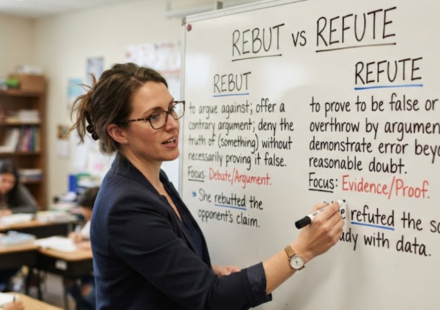
Rebut vs Refute: What’s the Difference and When to Use Each?
Have you ever heard someone say they “refuted” an argument when they actually just disagreed with it? Or wondered whether rebut and refute mean the same thing? It’s a common source of confusion, even among experienced writers and…

Fair vs Fare: What’s the Difference and When to Use Each?
Have you ever paused while writing because you couldn’t decide whether to use fair or fare? You’re not alone. These two words sound exactly alike, making them one of the most commonly confused pairs in English. Yet despite their identical…

Bail vs Bale: What’s the Difference and When to Use Each?
English is full of words that sound alike but mean completely different things, and bail vs bale is a perfect example. These two words are pronounced the same in most English dialects, yet they belong to entirely different contexts. Using the wrong one…