


Infront or In Front: Which Spelling Is Correct?

A tiny space can completely change whether a phrase is considered correct English. That is exactly what happens with infront or in front. If you have ever wondered, “Is it infront or in front?”, the answer is straightforward: in front is the standard…

Showed vs Shown: Which Form Is Correct?
English has plenty of verbs that seem simple until you try to use them in a sentence. Showed or shown is a good example. Both words come from the verb show, but they do not work in exactly the same way. So, what is the past tense of show? The answer is…
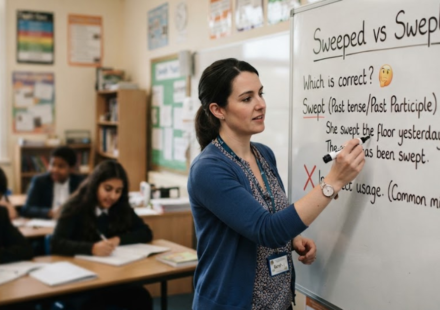
Sweeped vs Swept: Which Form Is Correct?
If you are unsure whether to say “I sweeped the floor” or “I swept the floor,” you are not alone. The word sweep is one of those English verbs whose past tense does not follow the usual -ed pattern. The correct form is swept. In standard English, sweeped…
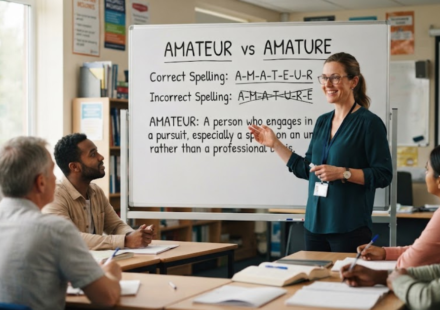
Amature vs Amateur: Which Spelling Is Correct?
It is easy to hesitate over a word when its pronunciation does not clearly reveal its spelling. Amature vs amateur is a common example. You may have seen amature, amatuer, or even other variations online and wondered which one is correct. The answer is…

Apon vs Upon: Which Spelling Is Correct?
A single letter can make the difference between a standard English word and a spelling mistake. That is exactly why apon vs upon can be confusing, especially when the two forms may sound similar in casual speech. In modern standard English, upon is the…

Heard vs Herd vs Hurd: What’s the Difference?
A single letter can completely change the meaning of a word. That is exactly what happens with Heard vs Herd vs Hurd. These three terms sound similar when spoken, but they do not have the same meaning—or the same status in standard English. Heard and…

Itself or Its Self: Which Spelling Is Correct?
Sometimes English spelling questions come down to something as simple as a space. Itself or its self is one of those confusing pairs. If you’ve ever stopped while writing and wondered whether “itself” should be written as one word or…

Invision or Envision: Which Word Is Correct?
Sometimes one letter can make the difference between a standard English word and a spelling that only looks right. Invision or envision is a good example. If you have written a sentence such as “I can invision the future,” you may have…

Unregister vs Deregister: What’s the Difference?
If you have ever removed your name from a course, canceled a registration, or taken an account off an official list, you may have wondered whether to say unregister or deregister. Both words are used in English, and in many situations, they mean…
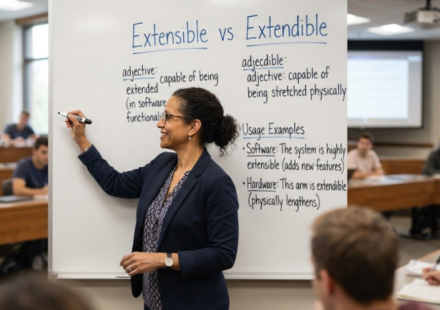
Extensible vs Extendible: What’s the Difference?
When two words look almost identical, it is tempting to treat them as interchangeable. Extensible vs extendible is a good example. Both words are related to the idea of making something longer, larger, or more capable, but they are not always used in the…