
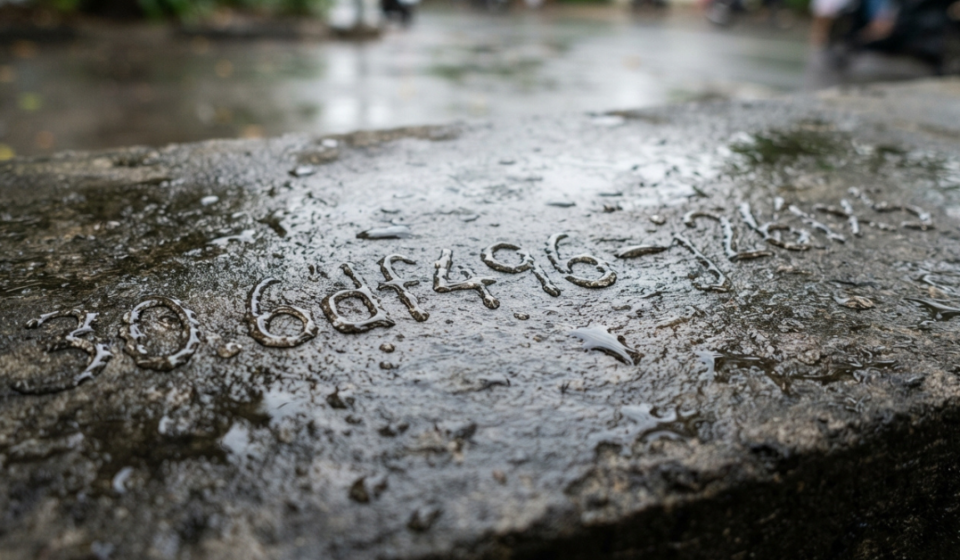

Have you ever come across a strange combination of numbers and letters and wondered whether it was a product, chemical, ingredient, or technical code? That’s exactly what is happening with 30.6df496–j261x5 with water.
At first glance, the term looks scientific. It contains a decimal number, letters, digits, and a separator, followed by the ordinary word “water.” That combination can easily make someone wonder whether it refers to a chemical mixture, cooking ingredient, laboratory material, or some kind of product.
Here’s the important part: 30.6df496–j261x5 does not currently have a clearly established public identity as a food ingredient, cooking substance, or recognized chemical. Recent online references generally treat it as an unidentified alphanumeric identifier rather than a culinary material.
So if you’re asking, “Can I cook with 30.6df496–j261x5?”, the safest answer is no—not unless you can first establish exactly what the code represents.
What Is 30.6df496–j261x5?
The first thing to understand is that 30.6df496–j261x5 is a string of characters, not an automatically recognizable substance.
There is currently no widely documented culinary definition for it. It doesn’t resemble the conventional naming systems people normally encounter for ingredients, spices, food additives, or common cooking chemicals.
Recent articles discussing the term describe it as something that could resemble a machine-generated identifier, database reference, product code, software value, laboratory reference, or other internal designation. Importantly, these are possibilities rather than a confirmed identification.
That distinction matters.
A sequence of letters and numbers can look highly technical without telling you what the underlying item actually is.
Breaking Down the Code
You might be tempted to interpret each section individually:
30.6 | df496 | j261x5
But there’s no verified public standard showing that these sections have specific meanings.
For example, it would be speculation to claim that:
- “30.6” definitely represents a concentration
- “df496” definitely represents a chemical
- “j261x5” definitely represents a product model
- The entire sequence definitely represents a particular compound
The appearance of the code alone isn’t enough to establish any of those conclusions.
What Does 30.6df496–j261x5 With Water Mean?
The phrase 30.6df496–j261x5 with water appears to have developed as a search query rather than the established name of a known water-based product or mixture.
Several recent webpages connect the phrase with possibilities such as:
- Water-quality testing
- Beverage or bottled-water records
- Laboratory samples
- Moisture measurements
- Production or batch tracking
- Technical identifiers
However, none of those interpretations can be confirmed simply from the code itself. One recent explanation specifically notes that a code appearing around water-related information could potentially identify a laboratory sample, production record, batch, or another internal reference.
In other words, “with water” doesn’t tell us what the code is.
It only tells us that someone has searched for or discussed the identifier in connection with water.
Is 30.6df496–j261x5 a Chemical?
There is currently no reliable evidence establishing 30.6df496–j261x5 as a recognized chemical substance.
That is important because unfamiliar chemical names normally come with additional information, such as:
- Chemical name
- CAS Registry Number
- Molecular formula
- Safety classification
- Manufacturer or supplier
- Safety Data Sheet
- Intended application
- Handling instructions
The code 30.6df496–j261x5, by itself, provides none of those details.
Some websites have attempted to explain the string as a technical identifier, but those explanations remain interpretations rather than independently established identification.
So it would be inappropriate to invent a chemical identity from the characters.
Is 30.6df496–j261x5 a Food Ingredient?
There is no reliable evidence that it is.
A genuine food ingredient normally has a recognizable identity that can be traced through a product label, ingredient specification, regulatory documentation, or manufacturer information.
For example, a package might list:
- Water
- Salt
- Citric acid
- Sugar
- Vinegar
- Vegetable oil
- A permitted food additive
An unexplained alphanumeric string isn’t enough to establish that something is edible.
This is why you shouldn’t treat 30.6df496–j261x5 as an ingredient simply because you found the phrase on a food-related webpage.
Can I Cook With 30.6df496–j261x5?
If your question is “can I cook with 30.6df496–j261x5?”, the practical answer is not based on the information currently available.
There is no verified evidence identifying the code as a cooking ingredient, seasoning, food additive, cookware material, or culinary product.
You should never add an unidentified substance to food simply because an internet page suggests that it might be useful.
Cooking requires ingredients with known identities and intended uses.
Why Identification Comes First
Before using any unfamiliar material in food preparation, you should know:
- What the substance actually is.
- Who manufactured or supplied it.
- Whether it is intended for food use.
- Whether it is food-grade.
- What quantity is appropriate.
- Whether it has any relevant warnings.
- Whether heat changes its properties.
- Whether it reacts with water, oil, acids, or other ingredients.
None of those questions can be answered from 30.6df496–j261x5 alone.
That’s why treating the code as a recipe ingredient would be a mistake.
What If You Found 30.6df496–j261x5 on Food Packaging?
This situation is slightly different.
If you actually saw the code printed on a package, don’t immediately assume it is an ingredient.
Food manufacturers use numerous types of identification and traceability information.
A code may be associated with:
- Lot identification
- Batch information
- Production date
- Manufacturing facility
- Inventory systems
- Internal quality-control records
- Shipping information
One recent discussion of the exact string similarly suggests that it could represent a batch, lot, sample, shipment, or internal production record depending on where it appeared.
Check the Surrounding Text
Look immediately before and after the code.
Is it next to:
- “LOT”
- “BATCH”
- “MFG”
- “EXP”
- “SKU”
- “REF”
- “MODEL”
- “SERIAL”
The surrounding label may provide much more useful information than the code itself.
If the code is genuinely printed on a food package and you need to know what it means, the manufacturer or retailer is the appropriate source for clarification.
Could 30.6df496–j261x5 Be a Batch Number?
Possibly, but this cannot be confirmed from the string alone.
Batch and lot codes frequently contain mixtures of letters and numbers. Manufacturers use them to trace products through production and distribution.
For example, a company might assign a particular code to a production run so that it can identify:
- When the product was manufactured
- Which facility produced it
- Which raw materials were used
- Where the product was distributed
- Which products belong to the same production batch
But there is no public documentation establishing that 30.6df496–j261x5 specifically is a batch number.
That is an important difference between a reasonable possibility and a verified fact.
Why Does the Code Look So Scientific?
This is one of the reasons unusual strings can cause confusion.
People naturally associate numbers, decimals, letters, and separators with scientific formulas or technical specifications.
For example:
30.6df496–j261x5
looks much more technical than:
Product Batch 1254
But appearance isn’t proof of function.
A computer system can generate identifiers that look complicated simply because they need to be unique.
Similar strings can appear in:
- Databases
- Software logs
- Inventory systems
- APIs
- Manufacturing systems
- Laboratory records
- Tracking platforms
- Product catalogs
A recent review of the term similarly describes it as resembling an unclassified machine-generated or coded reference rather than a documented consumer product.
Why Is “With Water” Showing Up in Searches?
The addition of “with water” makes the query sound like a recipe or chemical experiment.
But there are several possible reasons that two unrelated terms can become connected in search results.
Search-driven content
Once an unusual keyword starts appearing online, websites may publish articles targeting variations of the same query.
Those variations can include:
- 30.6df496–j261x5
- 30.6df496–j261x5 with water
- 30.6df496–j261x5 in food
- 30.6df496–j261x5 in cooking
- Can I cook with 30.6df496–j261x5?
That doesn’t necessarily mean all of those phrases describe separate real-world uses.
Data or content errors
A strange identifier can also appear when a database field, catalog value, or internal reference becomes visible in a location where ordinary users weren’t supposed to see it.
Copying between websites
Once one article makes a claim about an unusual term, other pages may repeat the claim without independently checking it.
That can make an uncertain explanation look increasingly authoritative simply because multiple websites say similar things.
Is It Safe to Mix 30.6df496–j261x5 With Water?
You should not mix an unidentified substance with water merely because someone online uses the phrase “30.6df496–j261x5 with water.”
Water is not automatically a neutral ingredient in every chemical situation.
Some substances:
- Dissolve in water
- React with water
- Produce heat when mixed with water
- Change acidity
- Release gases
- Form precipitates
- Remain suspended rather than dissolve
Without knowing what a substance actually is, you cannot predict how it will behave.
And if you don’t actually have a physical substance corresponding to the code, there is nothing meaningful to mix in the first place.
What If Someone Says You Can Cook With It?
Be skeptical.
Several recent webpages specifically address the question of cooking with this identifier, but the available evidence does not establish it as a legitimate cooking ingredient. One article describes the string as a technical identifier rather than an edible material.
Another recent source says the identifier has no clearly established public identity and should not be assumed to represent a consumer product or chemical.
The safest response is simple:
Ask for the actual product name and documentation.
If someone tells you that a mysterious code is an ingredient, they should be able to identify the substance, manufacturer, intended use, and relevant safety information.
How to Verify an Unknown Food-Related Code
If you encounter 30.6df496–j261x5 on a package, website, recipe, or document, don’t guess.
Use this process.
1. Record the Exact Code
Copy it exactly.
Pay attention to:
- Uppercase and lowercase letters
- Hyphens
- Dashes
- Decimal points
- Spaces
- Underscores
Even a small transcription error can lead to completely different search results.
2. Check the Original Source
Ask where you found it.
Was it:
- A food package?
- A bottle?
- A recipe?
- A laboratory report?
- A website?
- A software application?
- A warehouse label?
- A product invoice?
Context is often the missing piece.
3. Look for a Product Name
If the code appears next to an ordinary product name, search the product name together with the code.
That may reveal whether the string is a model number, batch identifier, or internal reference.
4. Contact the Manufacturer
If the code appears on a physical product, the manufacturer is usually in the best position to explain it.
Give them:
- Exact code
- Product name
- Package size
- Lot or batch information
- Purchase location
- Photograph of the label, if appropriate
5. Don’t Substitute Guesswork for Documentation
This is especially important when food or chemicals are involved.
A search result isn’t a substitute for a product specification or safety document.
How to Tell a Real Food Additive From a Random Code
A food additive isn’t normally identified solely by an arbitrary-looking string.
Depending on the jurisdiction, additives may appear under recognized names or established numbering systems.
For example, consumers may encounter:
- Ingredient names
- INS numbers
- E-numbers
- Common chemical names
- Functional descriptions
The exact labeling rules depend on the country and product.
That’s very different from finding an unexplained string like 30.6df496–j261x5 with no accompanying substance name.
30.6df496–j261x5 vs. a Real Cooking Ingredient
| Characteristic | 30.6df496–j261x5 | Normal Cooking Ingredient |
| Recognized food name | Not established | Usually yes |
| Culinary purpose | Not established | Defined |
| Food-use documentation | Not established | Normally available |
| Recipe usage | Not verified | Established |
| Manufacturer identification | Not established | Usually available |
| Food-grade status | Unknown | Should be specified where relevant |
| Safe quantity | Unknown | Product-specific |
| Cooking instructions | None verified | Often available |
The key word in the left-hand column is unknown.
That’s why you shouldn’t turn an unidentified code into a kitchen ingredient.
Common Misunderstandings About 30.6df496–j261x5
“It has numbers, so it must be a chemical.”
Not necessarily.
Technical identifiers, inventory codes, software values, and database references can all contain numbers.
“It appears with water, so it must dissolve in water.”
No.
The phrase “with water” doesn’t establish a chemical relationship.
“Several websites talk about it, so it must be real.”
Not necessarily.
Multiple pages can repeat the same unsupported claim.
“It looks like a product code, so I can use it as a product.”
A product code identifies something. It isn’t necessarily the thing itself.
“It appeared on a food website, so it must be food-related.”
Websites can contain indexing errors, copied material, automatically generated content, or unexplained identifiers.
Context matters.
What Should You Do If You Already Used It in Food?
If you genuinely added an unidentified substance to food, don’t rely on the code alone to determine whether there is a safety issue.
The appropriate response depends on what the substance actually was, how much was used, and who may have consumed it.
If there is a possibility that an unknown chemical or non-food substance was ingested, contact your local poison-information service or a medical professional and provide the actual product packaging or substance identification if available.
Don’t attempt to neutralize an unknown substance with another household chemical.
And don’t assume that heating or boiling automatically makes an unidentified substance safe.
Frequently Asked Questions
What is 30.6df496–j261x5?
30.6df496–j261x5 is an unusual alphanumeric string whose exact identity or purpose has not been reliably established in publicly available documentation. Recent online discussions generally treat it as a possible technical or machine-generated identifier rather than a recognized food substance.
What does 30.6df496–j261x5 with water mean?
The phrase may refer to an online search connecting the identifier with water, a beverage, moisture measurement, laboratory testing, or production records. However, the code itself does not establish any particular water-related meaning.
Can I cook with 30.6df496–j261x5?
There is no verified evidence that 30.6df496–j261x5 is a cooking ingredient or food-grade substance. You should not add an unidentified code or substance to food.
Is 30.6df496–j261x5 a chemical?
There is currently no reliable public evidence establishing the string as the name of a recognized chemical.
Is 30.6df496–j261x5 an ingredient?
No recognized food-ingredient identity has been established for the code. If you saw it on food packaging, it may instead be a traceability, batch, inventory, or other internal reference.
Can 30.6df496–j261x5 be mixed with water?
You should not mix an unidentified physical substance with water until its identity and intended use have been established.
Is 30.6df496–j261x5 dangerous?
The code itself isn’t enough to determine whether a physical substance is dangerous. The important question is what, if anything, the code identifies. If you have an actual unknown substance, identify it before handling, consuming, or mixing it.
Why does 30.6df496–j261x5 appear in cooking searches?
The phrase appears to have become associated with cooking-related search queries and online articles. That association does not establish that the code is a culinary ingredient or cooking method.
Could it be a batch number?
It could potentially be an internal identifier or batch-related reference, but there is no verified public documentation proving that this particular string is a batch number.
Where should I check if I find this code on a food product?
Start with the complete product label and manufacturer’s information. Look for terms such as LOT, BATCH, REF, SKU, MFG, or MODEL. If the meaning remains unclear, contact the manufacturer or retailer with the exact code.
Final Thoughts on 30.6df496–j261x5 With Water
The mystery surrounding 30.6df496–j261x5 with water comes largely from the fact that the string looks technical while providing almost no context about what it actually represents.
Based on the available evidence, it should not be treated as a recognized cooking ingredient, food additive, recipe component, or known chemical. Recent sources instead describe it as an unidentified or potentially machine-generated identifier, with possible uses ranging from internal records to product or laboratory references. Those interpretations remain possibilities rather than confirmed identification.
And if you’re specifically asking “can I cook with 30.6df496–j261x5?”, don’t experiment with an unidentified substance.
Find the original source, identify the actual product or material, check its intended use and safety documentation, and only then decide how it should be handled.
When food and water are involved, a strange code isn’t something to decode by guesswork. Identification comes first, and cooking comes second.