
A strange software error can turn a simple computer problem into a frustrating search for answers. If you’ve encountered software Ralbel28.2.5 issue, you may have noticed that the name looks like a conventional application followed by a version number. But there is an important catch: publicly available information does not clearly establish Ralbel28.2.5 as a recognized mainstream software release or officially documented bug.
That makes troubleshooting a little different.
Several websites currently discuss Ralbel28.2.5, describing crashes, installation failures, compatibility problems, dependency conflicts, performance issues, and other symptoms. However, those descriptions do not agree on what Ralbel actually is or what causes the supposed bug.
So rather than presenting an unverified explanation as fact, this guide takes a safer approach. We’ll explain what ralbel28.2.5 may represent, how to investigate the bug ralbel28.2.5, and what you can do to troubleshoot the underlying software problem without putting your system or data at unnecessary risk.
What Is Ralbel28.2.5 Software?
At first glance, ralbel28.2.5 looks like a product name combined with a version number.
The “28.2.5” portion resembles conventional software versioning, where numbers identify a particular release or build. The problem is that there is no clearly verified public documentation establishing exactly which software, company, or project the name belongs to.
Current search results contain several competing explanations. Some websites describe Ralbel as business automation or data-management software, while others discuss it as a technical module, system tool, or development component. Other sources are much more cautious and point out that the identity of the software cannot be independently confirmed.
That means Ralbel28.2.5 should not automatically be treated as a confirmed commercial software product simply because multiple websites mention it.
What Could Ralbel28.2.5 Represent?
Depending on where you encountered the term, it could potentially be:
- A version number for an internal application
- A private or enterprise software component
- A development or testing build
- A package or library identifier
- An internal error reference
- A generated build label
- A misspelled or incorrectly copied software name
- A keyword being used by unrelated websites
The context is therefore more important than the name itself.
Why Is the Software Ralbel28.2.5 Issue Difficult to Verify?
Normally, researching a software bug is relatively straightforward.
You would expect to find an official developer, release notes, a changelog, a public issue tracker, documentation, or a support article describing the problem.
With software Ralbel28.2.5 issue, that trail is difficult to establish.
A number of pages currently discuss the term, but they provide conflicting explanations. One source describes dependency problems, another discusses configuration caching, while others mention label rendering, memory management, or application installation problems.
Those explanations cannot all describe the same underlying bug without stronger evidence.
This is an important lesson when researching obscure software problems:
A large number of search results does not necessarily mean there is a verified software bug.
Search visibility and technical evidence are two different things.
What Problems Are Reported With Ralbel28.2.5?
Although the reports are inconsistent, several recurring symptoms appear across pages discussing the term.
These include:
- Application crashes
- Startup failures
- Slow performance
- Freezing or unresponsive windows
- Installation problems
- Failed updates
- Dependency conflicts
- Plugin or extension failures
- Authentication problems
- Compatibility errors
- Unexpected system behavior
Some articles specifically associate the alleged bug ralbel28.2.5 with dependency mismatches or problems following an update. Others describe completely different technical scenarios.
Because there is no verified universal symptom list, don’t assume that every one of these problems has the same cause.
Instead, treat the symptom as the starting point for diagnosis.
Is Ralbel28.2.5 a Real Software Bug?
This is perhaps the most important question.
Based on the publicly available information reviewed, there is not enough authoritative evidence to confirm Ralbel28.2.5 as an officially documented software bug.
That does not mean users cannot experience real problems associated with a file, application, or environment displaying this identifier.
For example, a genuine application could crash and display Ralbel28.2.5 in a log. A private enterprise system could use the number as an internal build identifier. A development project could also have a component using the same label.
The uncertainty is about the meaning of the identifier, not whether software can experience crashes or compatibility problems.
Understanding the “Bug Ralbel28.2.5” Claims
Searches for bug ralbel28.2.5 produce a surprisingly wide range of proposed explanations.
Some pages claim that the issue involves:
- Dependency conflicts
- Memory management
- Configuration caching
- Deployment environments
- Label rendering
- Database communication
- Plugins
- Installation files
The problem is that these are fundamentally different technical explanations.
One recent analysis even points out that multiple websites discuss Ralbel without clearly identifying what category of software it actually is, while recycling generic troubleshooting advice.
That is a strong reason to avoid copying a supposedly specific “root cause” from an article unless the information can be traced to a developer, technical advisory, source code, or reproducible diagnostic evidence.
Common Causes of a Ralbel28.2.5-Type Software Problem
Even though the exact identity of Ralbel28.2.5 remains uncertain, the types of failures described online have familiar causes.
1. Incomplete Software Updates
An interrupted update can leave different components at different versions.
For example, the main application might be updated while a supporting library remains on an older release. That mismatch can cause crashes or unexpected behavior.
2. Dependency Conflicts
Many applications rely on external libraries and runtime components.
If the application expects one version while the system provides another, the program may fail to start or behave unpredictably.
3. Compatibility Problems
A newer software build may not work correctly with an older operating system, driver, runtime, plugin, or hardware configuration.
Always check the application’s actual system requirements before assuming the software itself is broken.
4. Corrupted Files
A damaged installation can produce symptoms that look like a complicated software bug.
Potential causes include:
- Interrupted downloads
- Failed updates
- Sudden shutdowns
- Disk problems
- Incomplete installations
- Corrupted configuration files
5. Conflicting Plugins or Extensions
Third-party extensions can sometimes interfere with application updates.
If the problem began immediately after adding a plugin, temporarily disabling it can help determine whether it is involved.
6. Configuration Problems
An application can fail even when the program files themselves are intact.
Incorrect permissions, environment variables, network settings, cached data, or configuration files can all create unexpected behavior.
How to Fix Bug Ralbel28.2.5 Safely
If you’re searching for fix bug ralbel28.2.5, resist the temptation to download an unofficial “repair tool.”
Because the software’s identity is unclear, the safest troubleshooting method is to diagnose the actual application first.
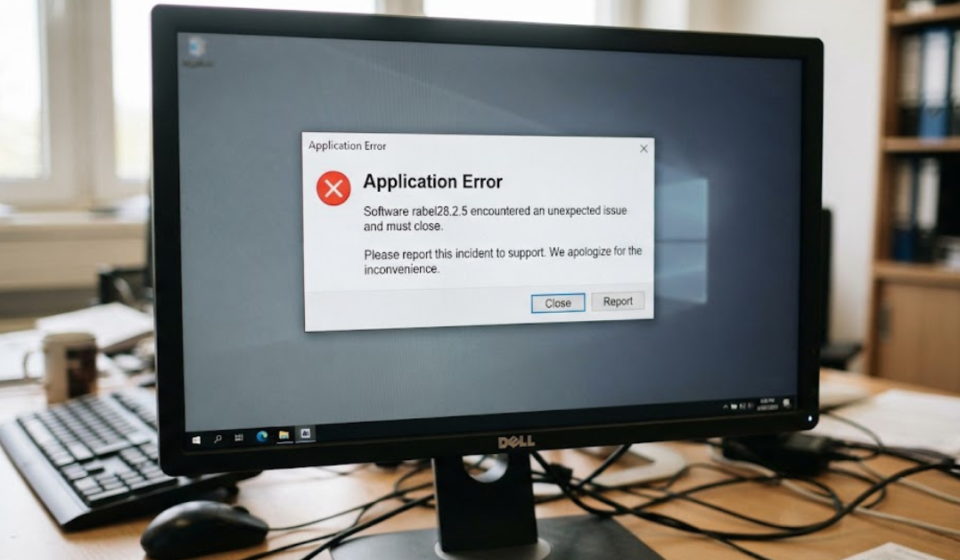
Step 1: Capture the Complete Error
Don’t save only the phrase:
Ralbel28.2.5 error
Record the entire message.
Look for:
- Error codes
- Application name
- File name
- File path
- Version information
- Timestamp
- Failed operation
- Additional diagnostic text
The surrounding information may reveal what Ralbel28.2.5 actually represents.
Step 2: Identify the Application
Ask yourself where you saw the term.
Was it:
- A desktop application?
- A browser?
- A mobile application?
- A system log?
- A command-line tool?
- An installer?
- A development environment?
- A business application?
Finding the originating application is often more useful than searching for the identifier by itself.
Step 3: Check What Changed
Think about what happened immediately before the problem appeared.
For example:
- Did you install an update?
- Did you install a new application?
- Did you add a plugin?
- Did the operating system update?
- Did you change configuration settings?
- Did the computer shut down unexpectedly?
The timing can help establish a cause-and-effect relationship.
Step 4: Restart the Application
A restart is basic, but it is still worth trying.
Temporary processes, memory states, locked files, and network sessions can sometimes produce problems that disappear after restarting.
Step 5: Check for an Official Update
If you can identify the software’s actual developer, visit its legitimate support or download channel.
Look for:
- Bug-fix releases
- Security patches
- Compatibility updates
- Hotfixes
- Updated dependencies
- Release notes
Do not install a random “Ralbel28.2.5 fix” from an unfamiliar website simply because it ranks highly in search results.
Step 6: Disable Recently Added Extensions
If the application supports plugins or extensions and the problem began after adding one, temporarily disable the new component.
If the issue disappears, you have a useful clue.
Step 7: Reinstall Only After Backing Up
If the installation appears damaged, reinstalling the legitimate application may help.
Before doing this:
- Back up important files.
- Save configuration data.
- Export project data where possible.
- Record your current version.
- Make sure you have access to the legitimate installer.
Reinstallation should be a controlled troubleshooting step, not the first thing you try.
What If Ralbel28.2.5 Appears in a Log?
A log entry is especially important because the string may not represent the name of the application at all.
It could be:
- A build identifier
- A request ID
- A component name
- A debug label
- A package version
- A temporary value
- An internal error reference
If you find ralbel28.2.5 inside a log, examine the lines immediately before and after it.
Look for the process name, timestamp, module name, exception type, and file path.
This surrounding information can often tell you far more than the unusual string itself.
Ralbel28.2.5 and Dependency Problems
Several online articles claim that dependency conflicts are responsible for the supposed Ralbel28.2.5 bug.
Dependency problems are certainly a common class of software failure, but there is not enough evidence to say they are the universal cause of Ralbel28.2.5 problems.
If your application reports a missing or incompatible dependency, however, investigate that specific dependency rather than searching for a generic Ralbel fix.
Check:
- Required library version
- Installed library version
- Runtime version
- Operating-system version
- Architecture
- Plugin compatibility
- Environment variables
Then compare those details with the application’s official documentation.
Should You Roll Back Ralbel28.2.5?
A rollback can be useful when a known software update regression has been confirmed.
But rolling back an unidentified application simply because a webpage recommends it is not always a good idea.
Before reverting to an older version, determine:
- What application is actually installed?
- What changed between versions?
- Is the older version still supported?
- Does it contain known security vulnerabilities?
- Can your data be opened safely afterward?
- Does the developer provide an official rollback procedure?
If an official support channel recommends a rollback, follow that procedure rather than downloading an arbitrary older installer.
Is New Software Ralbel28.2.5 Safe?
The name alone cannot establish whether new software Ralbel28.2.5 is safe or unsafe.
If you have found an executable using that name unexpectedly, investigate the file itself.
Check:
- Publisher
- File location
- Digital signature
- Installation date
- File properties
- Parent application
- Antivirus results
- Network behavior
- Source of the installer
Be especially cautious if a website tells you to disable antivirus protection before installing a “Ralbel28.2.5 fix.”
A legitimate troubleshooting procedure should not require you to blindly bypass security controls.
How to Avoid Similar Software Problems
Even when the exact cause of Ralbel28.2.5 is unknown, several habits can reduce the risk of software failures.
Keep backups
Important files should not exist in only one location.
Read release notes
Before installing a major update, check what changed and whether compatibility problems have been reported.
Keep dependencies current
Outdated runtimes and libraries can create compatibility problems.
Avoid unofficial installers
Download software from the developer or a trusted distribution platform whenever possible.
Maintain a rollback plan
For important business applications, know how to return to a stable version before applying an update.
Test updates before widespread deployment
Organizations should test new releases in a controlled environment before rolling them out to every user.
Common Mistakes When Searching for a Ralbel28.2.5 Fix
Mistake 1: Assuming the search results are official
A webpage ranking highly for fix bug ralbel28.2.5 is not necessarily written by the software developer.
Mistake 2: Downloading a “repair” program
An unknown repair executable can create more problems than it solves.
Mistake 3: Ignoring the original error
The complete diagnostic message is usually more useful than the keyword Ralbel28.2.5.
Mistake 4: Immediately deleting files
Removing an unfamiliar executable or library can break another application.
Mistake 5: Treating every report as the same bug
The online reports currently describe very different technical problems.
Until the underlying application is identified, those reports should not automatically be grouped together.
Frequently Asked Questions
What is the software Ralbel28.2.5 issue?
The software Ralbel28.2.5 issue is a search term associated with various reported software problems, including crashes, installation failures, compatibility issues, and dependency errors. However, publicly available information does not establish one standardized software bug with that exact name.
What is Ralbel28.2.5?
Ralbel28.2.5 looks like a software or build identifier consisting of the name “Ralbel” and version-style numbering. Its exact identity is unclear because reliable public documentation does not consistently identify a developer, product, or official release.
What is the bug Ralbel28.2.5?
There is no clearly verified universal bug Ralbel28.2.5 specification. Different websites attribute the term to different technical problems, so the actual cause depends on the application and environment involved.
How do I fix bug Ralbel28.2.5?
There is no single confirmed fix bug Ralbel28.2.5 procedure. Start by identifying the application, recording the complete error, checking recent changes, verifying dependencies and compatibility, and using the developer’s official support or update channel.
Is Ralbel28.2.5 a virus?
The name itself does not establish that a file is a virus. If an executable with this name appears unexpectedly, verify its publisher, location, digital signature, origin, and security status before running or deleting it.
Should I download new software Ralbel28.2.5?
Not until you can establish who developed it and where the legitimate version comes from. An unfamiliar download promoted as a “Ralbel28.2.5 fix” should be treated cautiously.
Why does Ralbel28.2.5 keep crashing?
Crashes can have many causes, including corrupted files, incompatible dependencies, plugins, configuration problems, operating-system conflicts, or insufficient resources. Without identifying the originating application, it is impossible to say which cause applies.
Can I roll back from Ralbel28.2.5?
Possibly, but only if you have identified the actual software and confirmed that the older version is compatible and safe. Prefer an official rollback process rather than downloading an unofficial older installer.
Why are there so many different explanations for Ralbel28.2.5?
The available web pages provide conflicting descriptions of the term. Some appear to treat it as a specific product, while others acknowledge that its identity is unclear. This makes it important to distinguish online claims from verified technical documentation.
Conclusion: Understanding the Software Ralbel28.2.5 Issue
The biggest takeaway from the software Ralbel28.2.5 issue is that the name itself does not provide enough information to diagnose a problem.
Although many websites discuss ralbel28.2.5 and propose explanations ranging from dependency conflicts to configuration problems, there is currently no strong public evidence establishing one universally recognized product or official bug behind the term.
That means the safest way to fix bug ralbel28.2.5 is not to follow a random “one-click fix.” Instead, identify the application, capture the complete error, inspect logs, check recent changes, verify dependencies, and use official software channels whenever possible.
If you encounter new software Ralbel28.2.5 unexpectedly, investigate its publisher and origin before installing, deleting, or modifying anything.
In other words, treat Ralbel28.2.5 as a clue—not a diagnosis. Once you know which application produced the identifier, the real troubleshooting process can begin.