
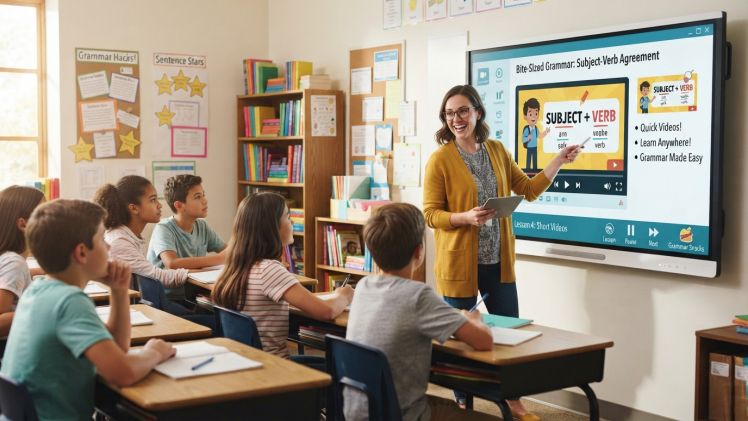

Language teachers have always borrowed from everyday life. Song lyrics, newspaper headlines, menus and adverts have all found their way into lesson plans because real language sticks better than invented examples. Today, a lot of that everyday language arrives in the form of short videos. Teachers of English and other languages now share quick explanations of tricky grammar, pronunciation drills and funny examples of common mistakes, often in less than a minute.
Used thoughtfully, these clips can wake up a sleepy Monday lesson and give students a model of natural speech. The challenge is getting them into the classroom reliably.
Why short clips suit language learning
Short videos are focused by nature. A good one tackles a single point, such as the difference between “fewer” and “less”, the pronunciation of “-ed” endings or when to use the present perfect. That focus matches how learners absorb grammar best: one idea at a time, with clear examples and plenty of repetition. Students also tend to pay attention to a format they recognise from their own phones.
The trouble with streaming in class
Anyone who has tried to play an online video in a classroom knows the risks. School networks may block social platforms entirely. The connection may drop halfway through. An autoplaying next video may be completely unsuitable for a room of fourteen-year-olds. For a reliable lesson, it is far better to have the clip saved on your own laptop or a school drive before the bell rings.
How to prepare clips ahead of time
When you find a useful video, save a copy while planning. A simple option is snaptik.life: you paste the link of a public TikTok video into the site, and it gives you a file to download, usually without the watermark. Because it runs in the browser, there is nothing to install, which matters on school computers where teachers often cannot add software.
Respect for the creator should be part of the lesson itself. Use clips for teaching in your own classroom rather than uploading them to public platforms, show the creator’s name on screen or in your slides, and if you want to share the material more widely, for example in a published course, ask the author for permission first. Explaining this to students is a good chance to talk about digital citizenship.
Building a grammar clip bank
Over a term, the clips you save can form a useful resource. Organise them by level and by topic, for example:
- Tenses and time expressions
- Articles and determiners
- Prepositions of time and place
- Conditionals
- Pronunciation and stress
- Commonly confused words
Add a short note to each file about which class you used it with and how it went. That small record makes planning next year much faster.
Turning a clip into a full activity
A video is a starting point, not a lesson on its own. A few simple activities help students actually work with the language:
- Predict and check. Show the first few seconds, pause, and ask students to predict the rule before the creator explains it.
- Spot the error. Many teaching clips show a mistake first. Ask students to identify and correct it before the reveal.
- Write your own examples. After watching, pairs write three new sentences using the target structure.
- Make a mini-lesson. Older students can script their own short explanation of a different grammar point, practising both accuracy and clear communication.
Check the content before you press play
Not every confident explanation online is correct. Watch each clip fully before using it, check the rule against a reliable grammar reference and be ready to discuss exceptions. Occasionally, a slightly flawed clip can become a lesson in itself, as students enjoy finding where an explanation oversimplifies.
Short videos will never replace careful teaching, but they can add energy, authenticity and variety. Prepared in advance and used with respect for their creators, they become one more useful tool in a language teacher’s kit.